The Platform Paradox: Why Your Best Partners Might Be the First to Join a Rival
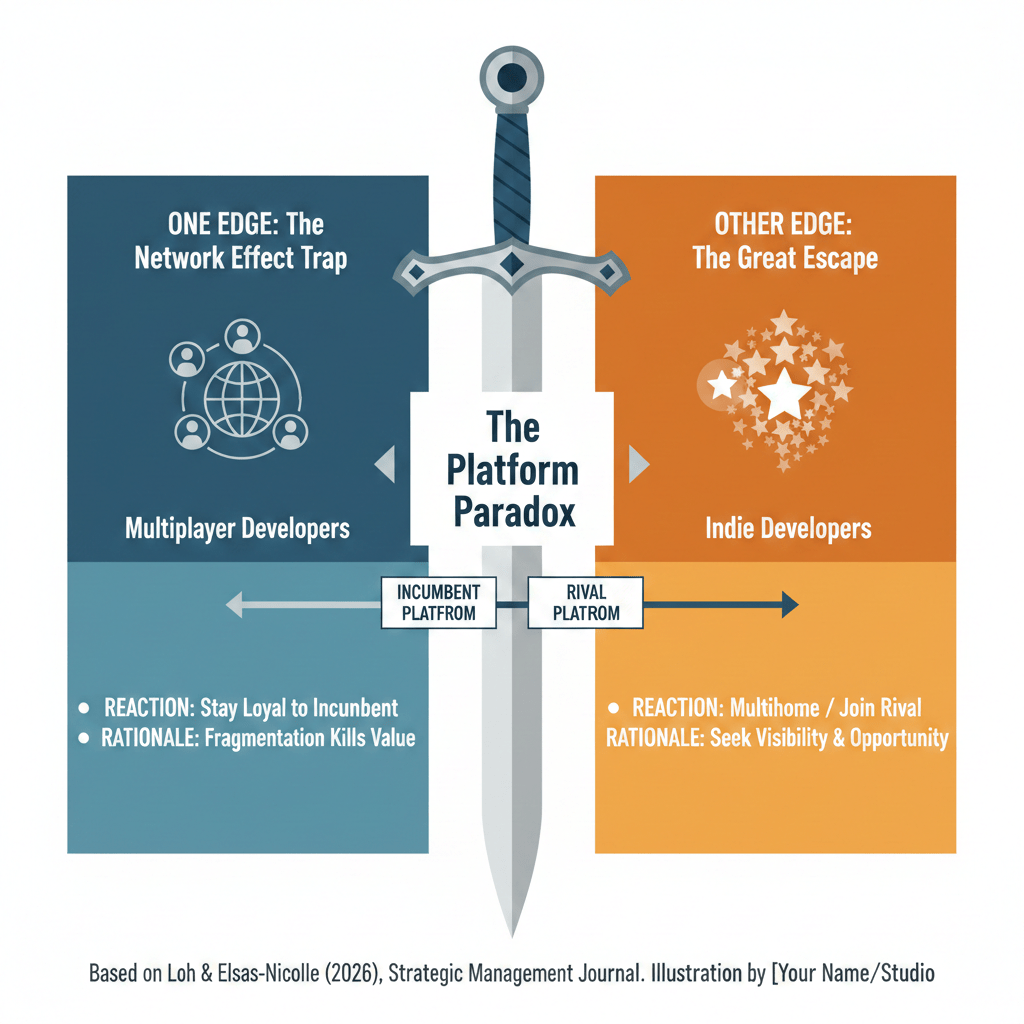
Dominant platforms often assume their sheer size creates a “moat” that prevents partners from leaving. However, new research shows that platform growth is a double-edged sword: while it increases user reach, it also intensifies internal competition, driving certain partners straight into the arms of new rivals.
Managers must realize that platform entry by a rival doesn’t just splinter the customer base—it reshapes partner psychology. To prevent defection, incumbents must balance the pursuit of collective platform goals with the individual survival needs of their most vulnerable partners.
The Strategic Trade-Off of Platform Dominance
Platform ecosystems rely on “complementors”—autonomous firms that create the products or services that give the platform its value. For decades, scholars have focused on how platform owners can attract these partners through pricing and governance. However, less is known about the strategic agency of the complementors themselves.
Dominance is a “double-edged sword.” A large, unified platform maximizes indirect network effects, giving partners access to the widest possible audience. But that same success attracts a flood of other partners, leading to hyper-competition. When a new rival enters the market, partners face a fundamental tension: do they stay with the incumbent to protect their network benefits, or join the newcomer to escape the crowd?
The Research Context: Steam vs. Epic Games
The study examined the 2018 entry of the Epic Games Store (EGS) into the PC distribution market, which had been dominated by Valve’s Steam. Steam was a behemoth with approximately 90 million monthly active users at the time. EGS entered with a disruptive 12% revenue-share model—significantly lower than the industry standard of 30%.
By analyzing a dataset of over 11,000 games, researchers used a “difference-in-difference” (DiD) framework to track two key strategic choices:
- Multihoming: The decision to join the entrant while remaining on the incumbent.
- Sales Participation: The willingness to join platform-wide sales promotions, which serves as a proxy for ecosystem cooperation.
Key Findings
Strategic Implications
For incumbents, the study suggests that network effects are not a perfect barrier to entry. If within-platform competition becomes too intense, partners with fewer resources will actively seek out rivals to gain attention. Managers must provide visibility tools specifically for these smaller partners to reduce their incentive to leave.
For entrants, the research highlights a “divide-and-conquer” opportunity. By targeting partners who feel “suffocated” by the incumbent’s size, a new player can build a viable catalog, even if it initially lacks the most popular, high-resource products.
Managerial Action Plan
- For Incumbents: Recognize that internal competition is a driver for partner defection. Improve discovery algorithms and visibility tools specifically for resource-poor firms.
- For Entrants: Target partners who feel marginalized or invisible on dominant platforms to build your initial catalog.
- For Orchestrators: Adapt your governance style. One-size-fits-all rules fail when competition intensifies. Align incentives with specific partner needs.
 Site Title
Leave a comment